
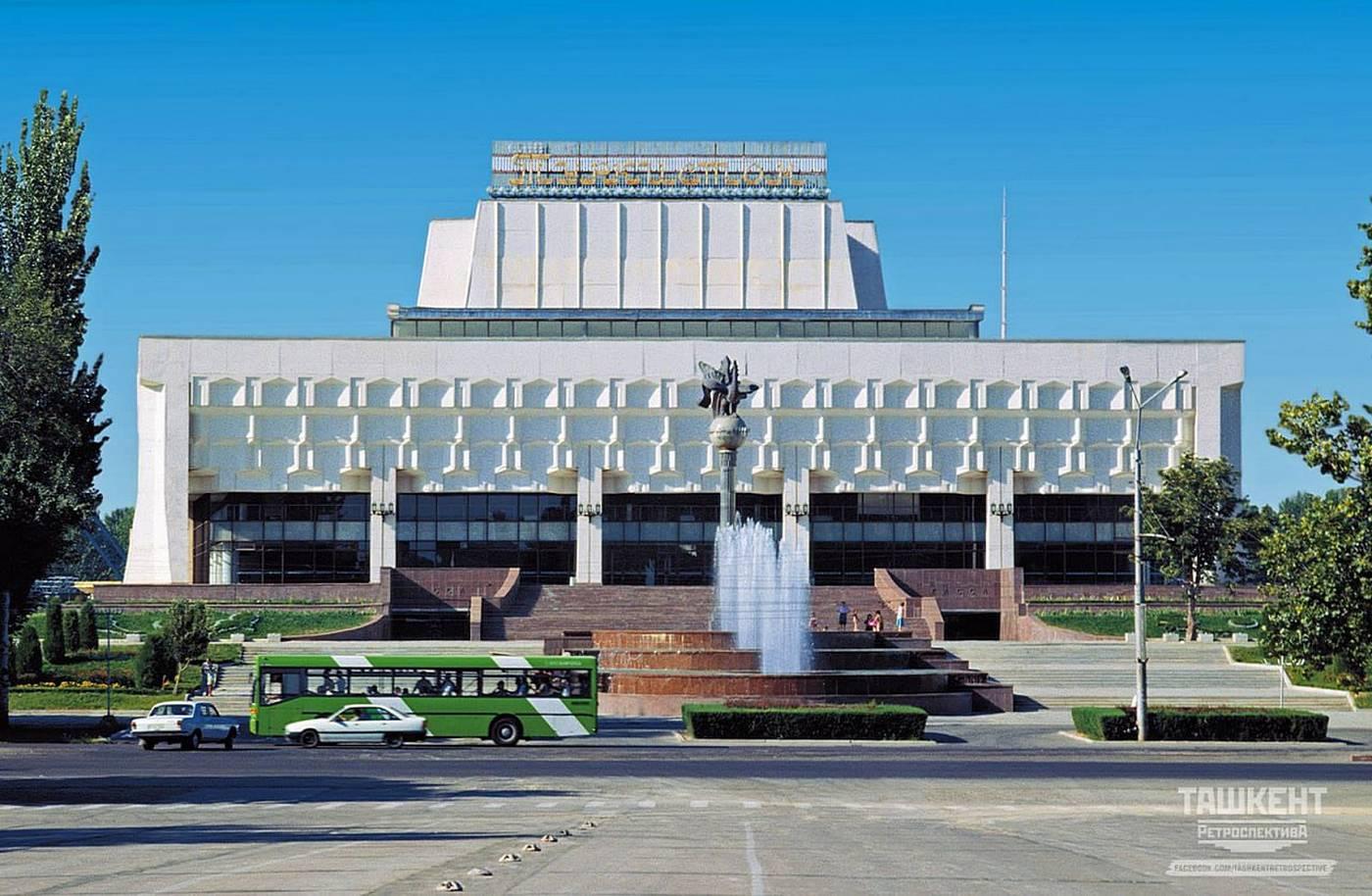
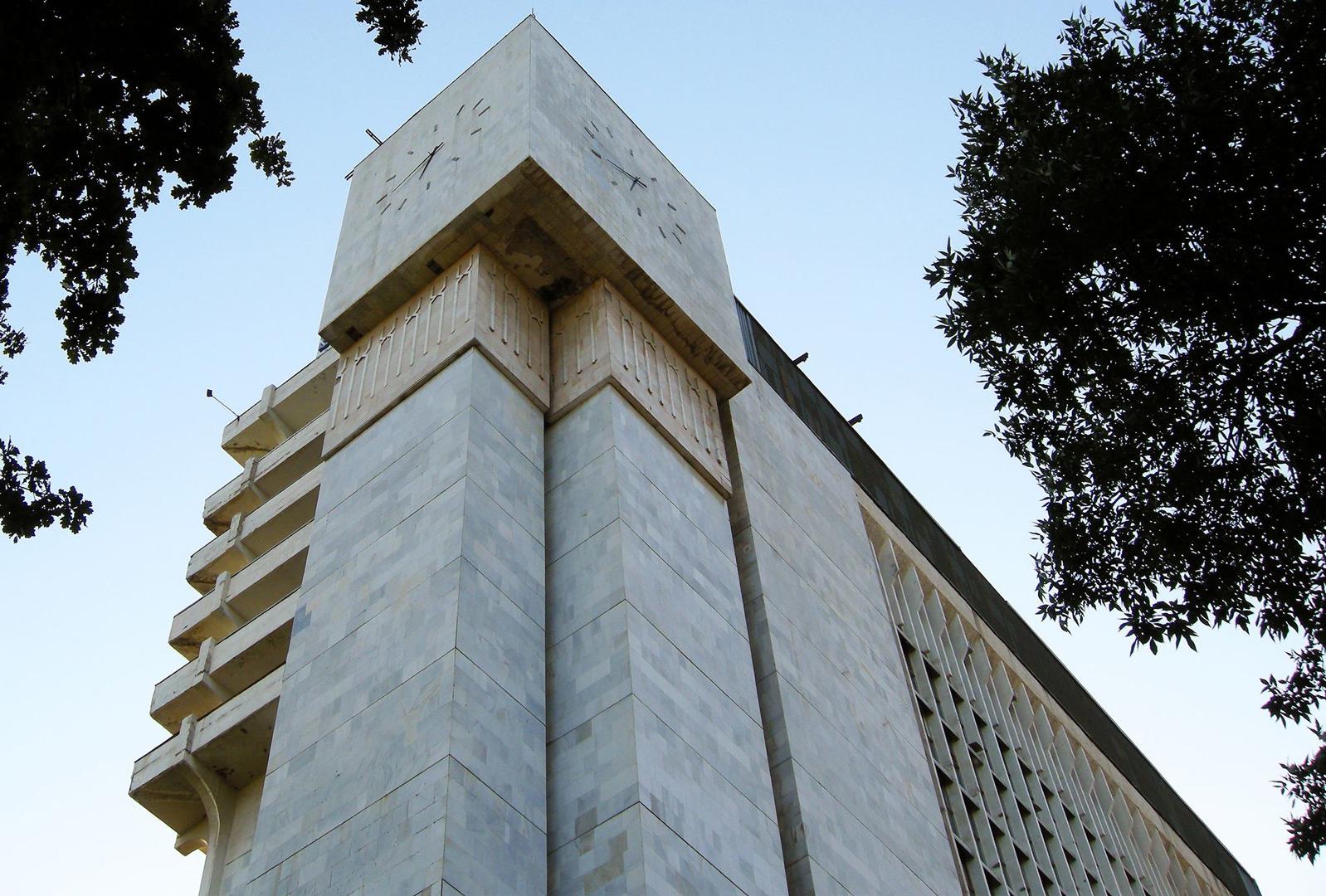
The majestic snow-white building of the concert hall is located at the intersection of Navoi Avenue and the former Parade Alley of Mustaqillik Square.
Project authors: architects Yu. Khaldeyev, M.
Neklyudova, L. Adamov, and F. Tursunov; engineer S. Petrov.
Originally designed for the Russian Drama Theatre, the
theatre eventually moved into the former House of Knowledge building. In 1993,
this building opened as the “Turkistan” Concert Hall. To the left of the main
structure, on the bank of the Ankhor canal, an open-air summer stage was
created, forming a unified concert complex with the main hall.
Architecture historian Olga Kazakova writes: “Over the
25 years from the start of design to completion of construction, this building
managed to change its name, purpose, location, and exterior appearance. It is
precisely because of this that it has become important for understanding the
architectural history of Tashkent.”
The main decoration of the façade consists of
stalactite niches characteristic of the national architectural tradition. In
the white-marble foyer, the stalactite motif continues, but unlike the laconic
façade, here appear carved ganch panels, elegant chandeliers, and ornamental
decoration on the second-floor landings.
The auditorium is adorned with ornamentation stylized
in the Islamic tradition. It is illuminated from above by a richly decorated
elliptical niche with light fixtures.
The hall seats 894: 698 in the parterre and 196 on the
balcony. Its unique stage measuring 31 × 25 metres and 26 metres high is
considered the largest stage platform in the country.
In front of the building towering over Navoi Avenue
stand a fountain and a column topped with a mythical bird.
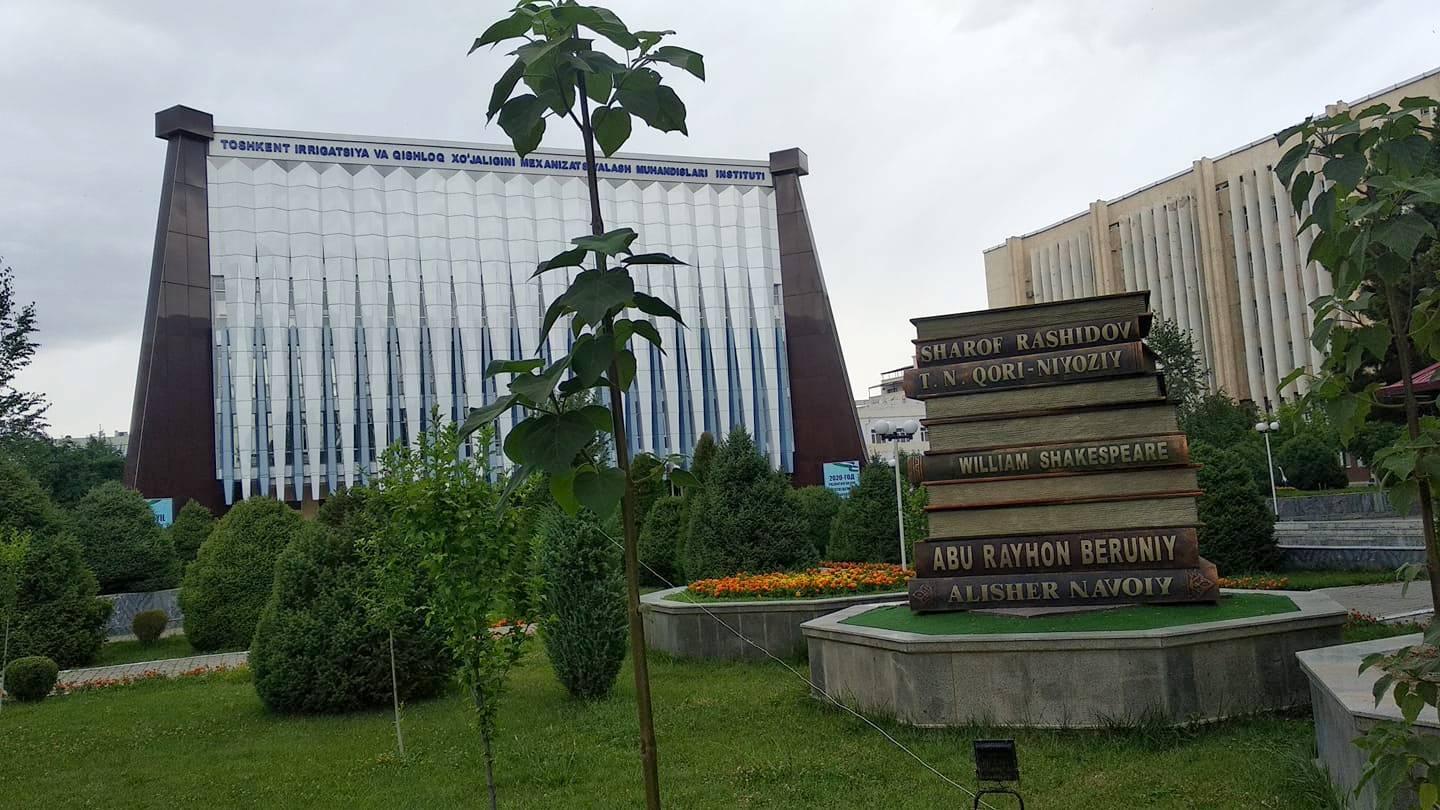
The National Research University “Tashkent Institute of Irrigation and Agricultural Mechanization E...
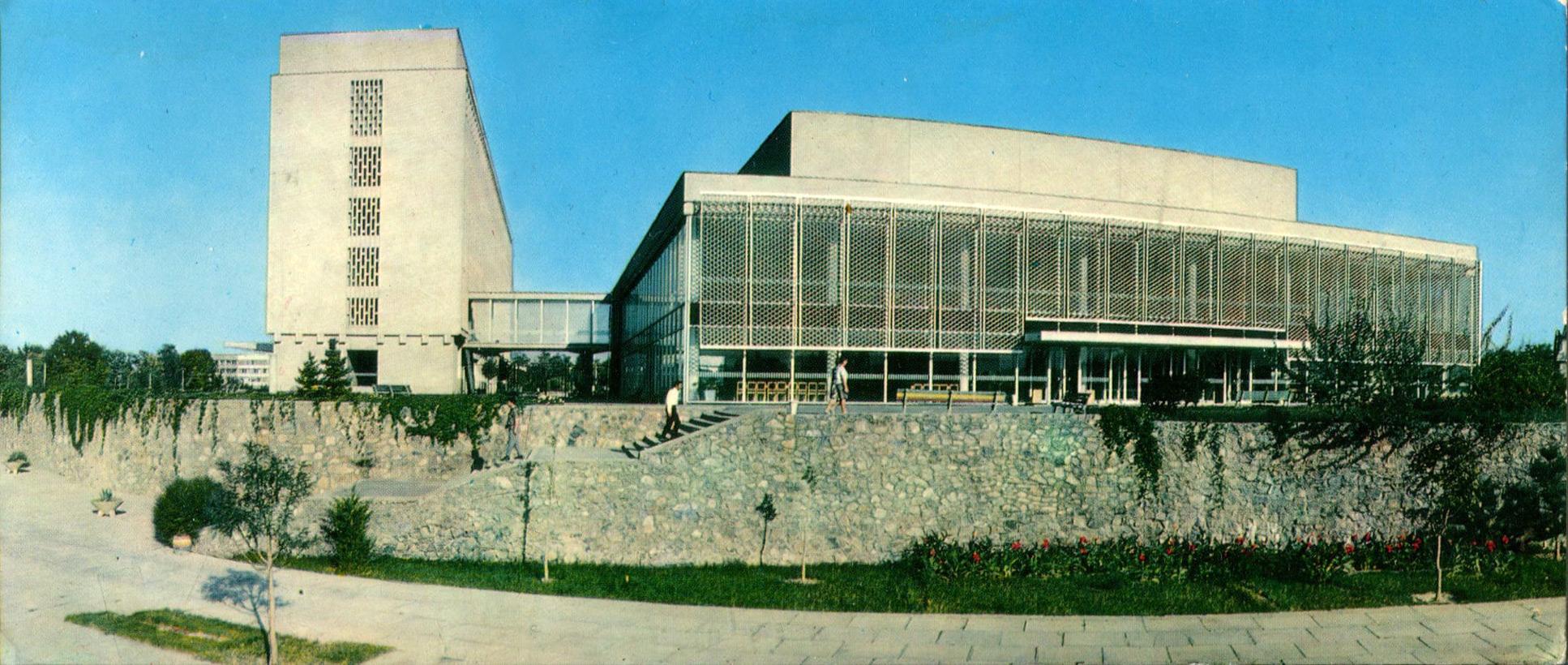
The former Central Committee of the Communist Party of Uzbekistan building was constructed in 1964....
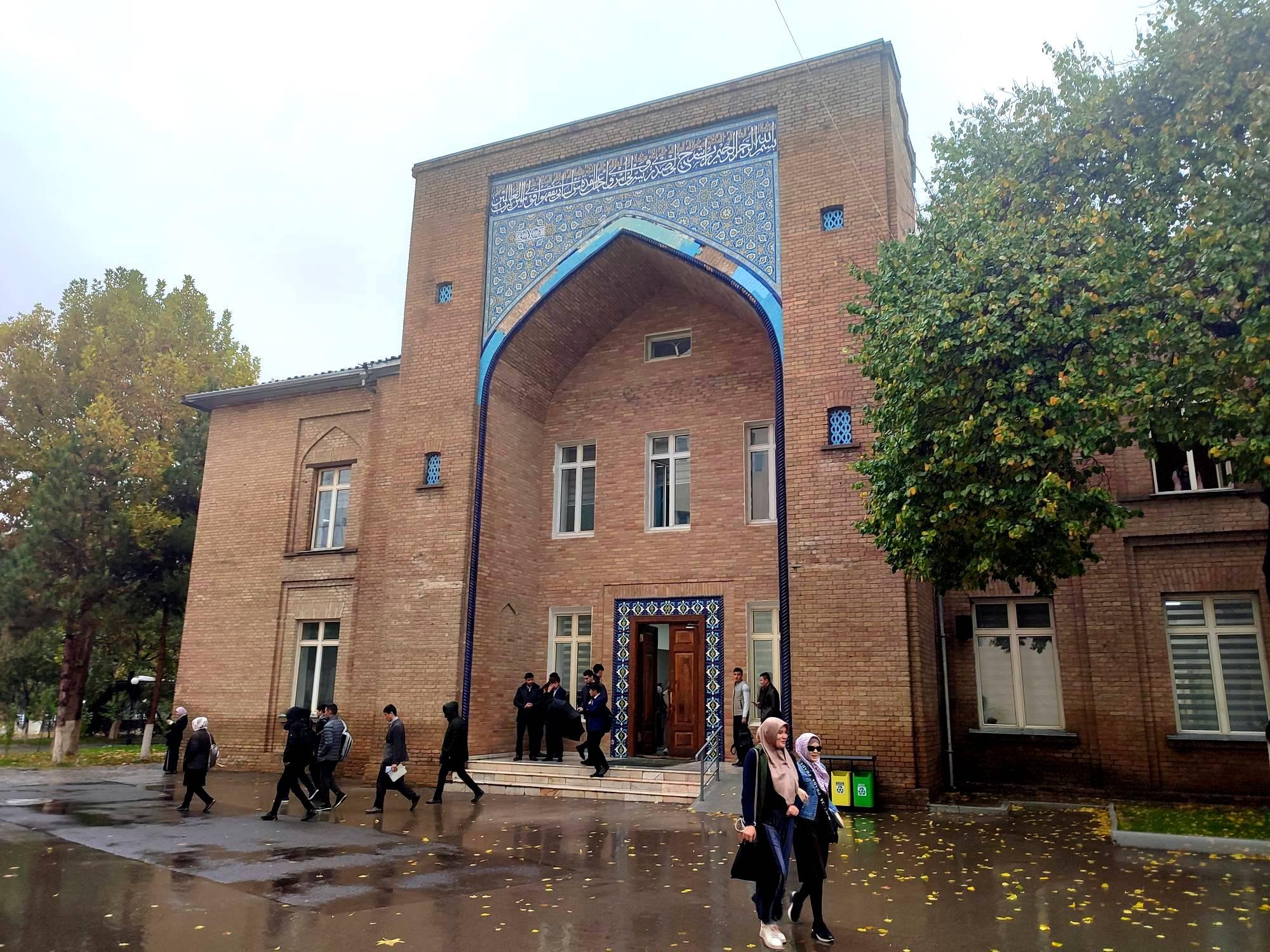
The building was constructed in 1928 for the cooperative technical school, which grew out of the pr...
Among the series of structures built for the 50th anniversary of the UzSSR, the 16-story building o...