
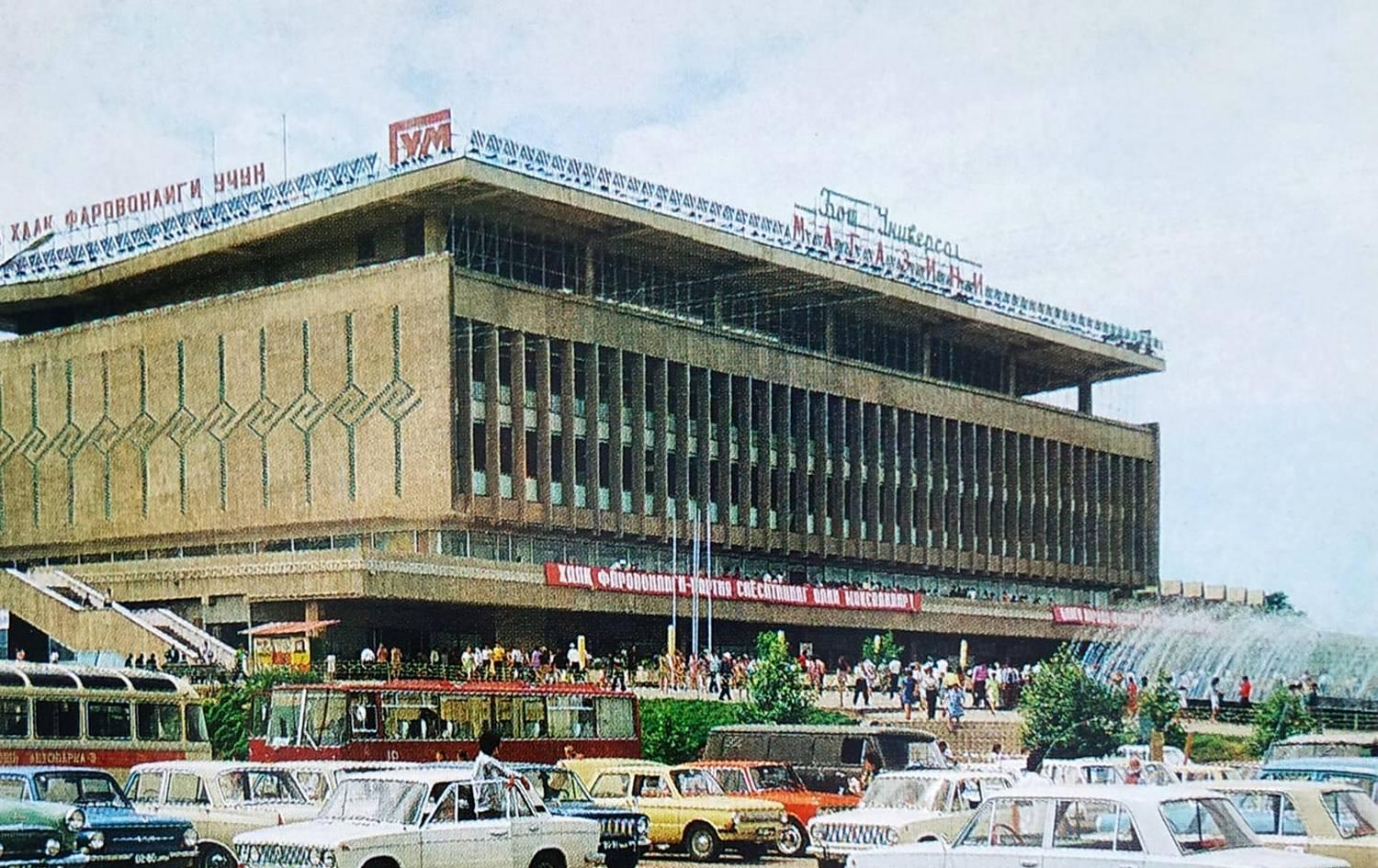
Opened in 1972, the Main Department Store (GUM) is an exemplary combination of functionality and minimalism in design and one of the most prominent representatives of modernism in the center of the old city.
The building was designed
as a four-story structure taking into account the surrounding development. At
the time of design, the Kukeldash Madrasa, located on a hill, dominated the
square. The GUM, also placed on an elevation, together with a planned hotel to
its left, was intended to form a symmetrical ensemble with the madrasa. Later,
the construction of the hotel to the left of GUM was abandoned; instead, a
hotel was built under a new project named “Moscow,” later renamed “Chorsu,” and
demolished in 2025.
Designed by architects L.
Komissar, A. Freytag, and I. Pak, GUM embodied new trends in creating shopping
complexes that emerged after the construction of TsUM: separation of customer
flows, cargo transport, and service personnel; convenient loading and rapid
movement of goods; and rational connection between storage areas and sales
floors.
The building’s and the
entire square’s main decoration was a cascading waterfall descending into a
large pool. Unfortunately, during reconstruction, the waterfall and pool were
removed and replaced with a parking lot.
From 2004 to 2011, the
former GUM building housed the Turkuaz store. Later, management passed to
“Toshkent Savdo Markazi” LLC, and in 2017 the shopping complex reopened as
“Savdo Toshkent Markazi,” featuring stores for household appliances, men’s and
women’s clothing, and children’s goods. In 2021, the building was purchased by
“Buyuk Eco Savdo” LLC for 242.8 billion sums.
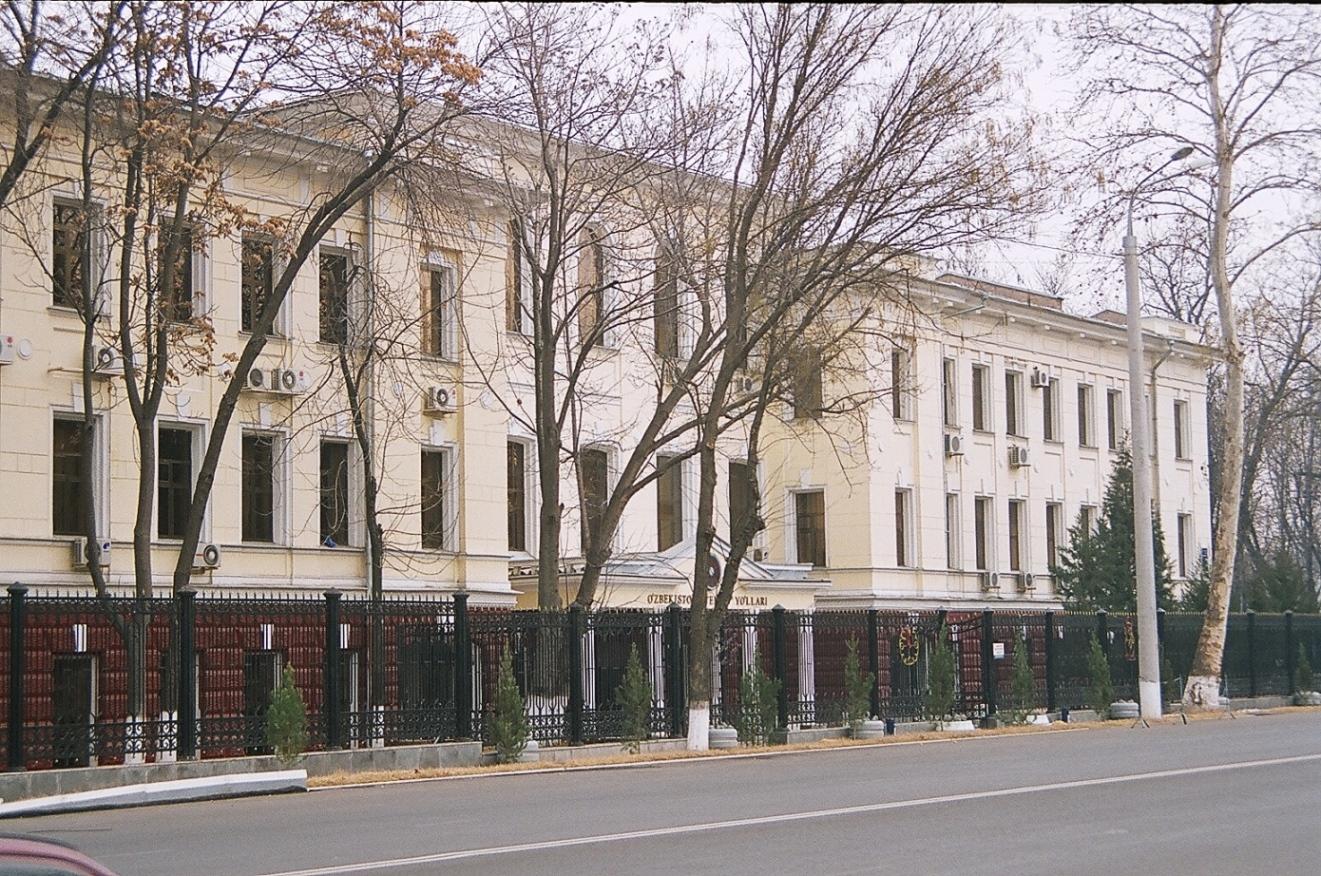
The first three-story building in Tashkent was constructed in 1914 based on the design of G. M. Sv...
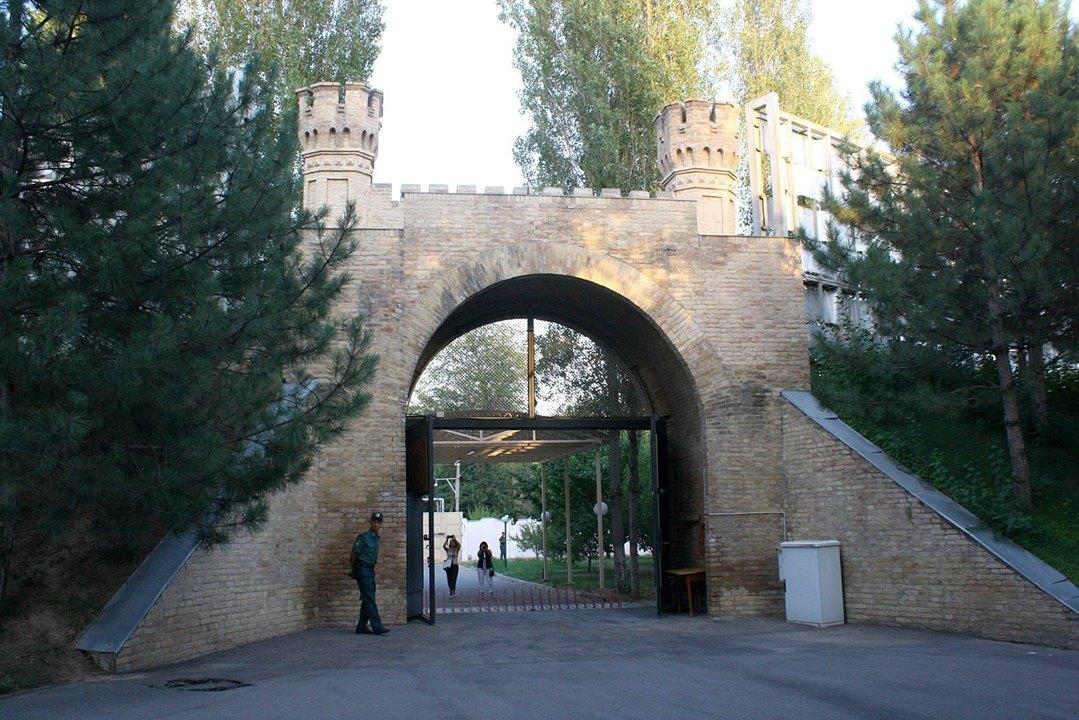
In 1865, a military fortress was built on the left bank of the Anhor, near the Qaytmas Gate. Surro...
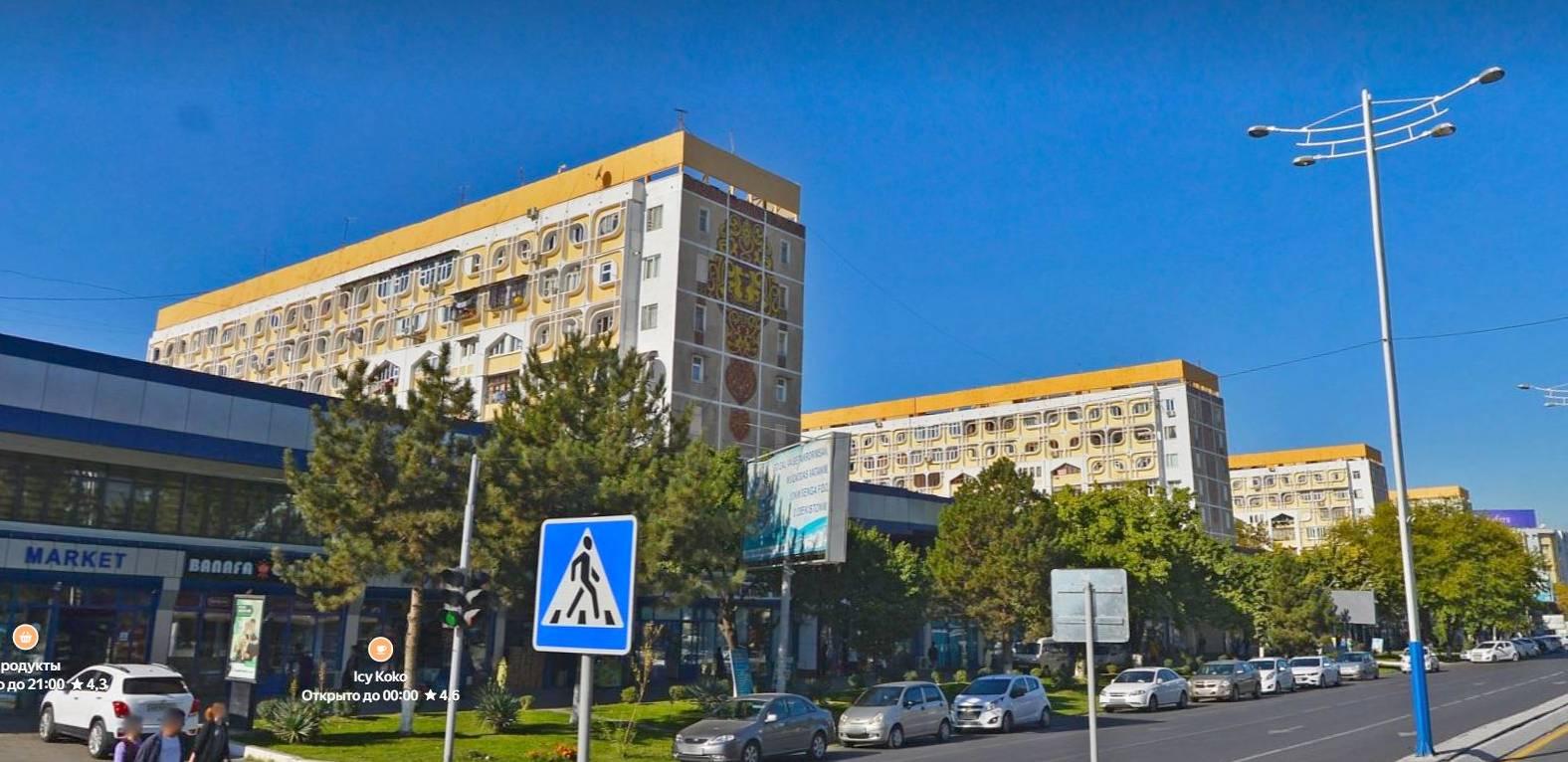
The distinctive buildings of the Bogkucha housing estate were designed by architects G. Korobtsev, ...
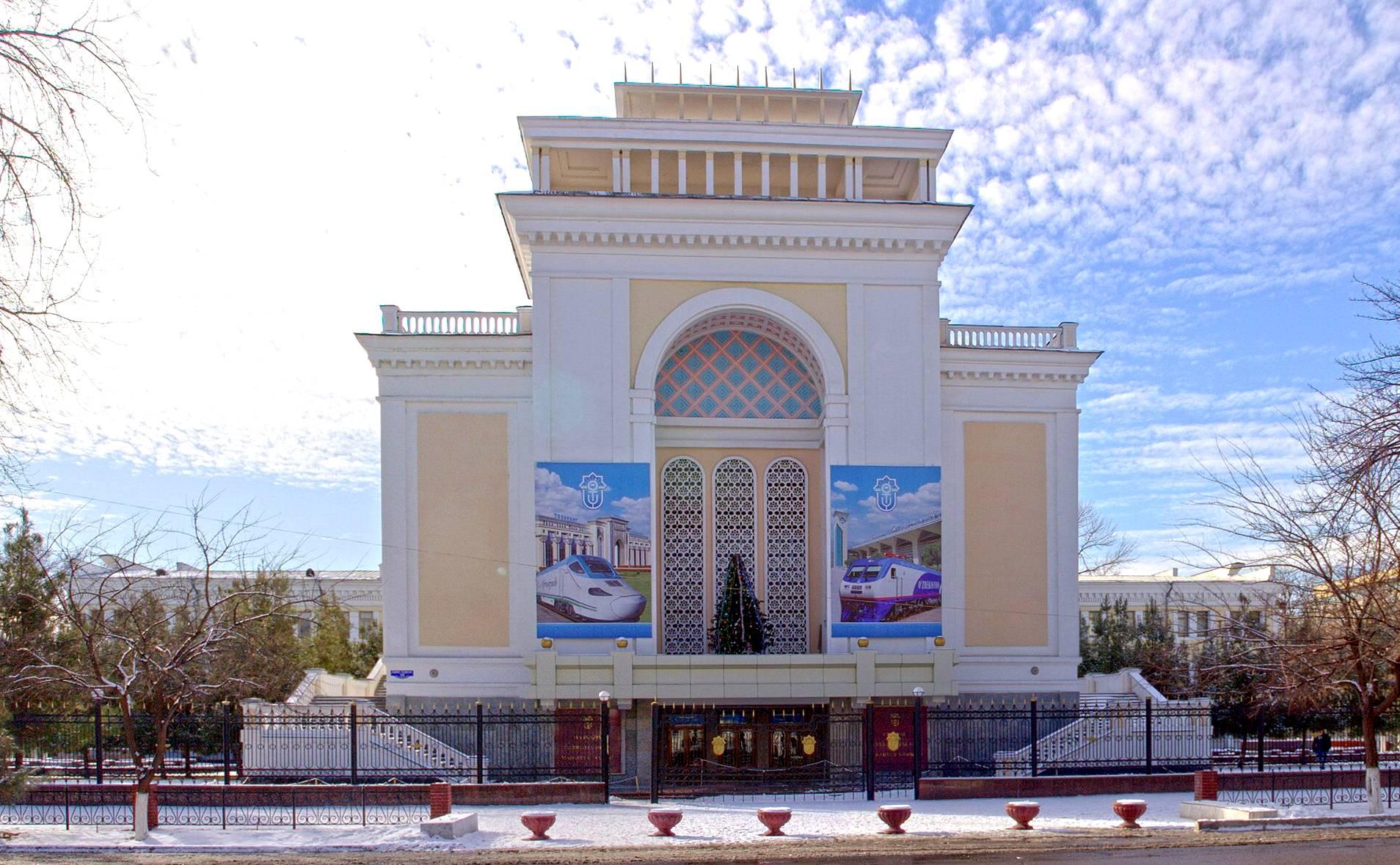
Built in 1938 according to the design of Soviet architect A. I. Pavlov in the styles of constructiv...