
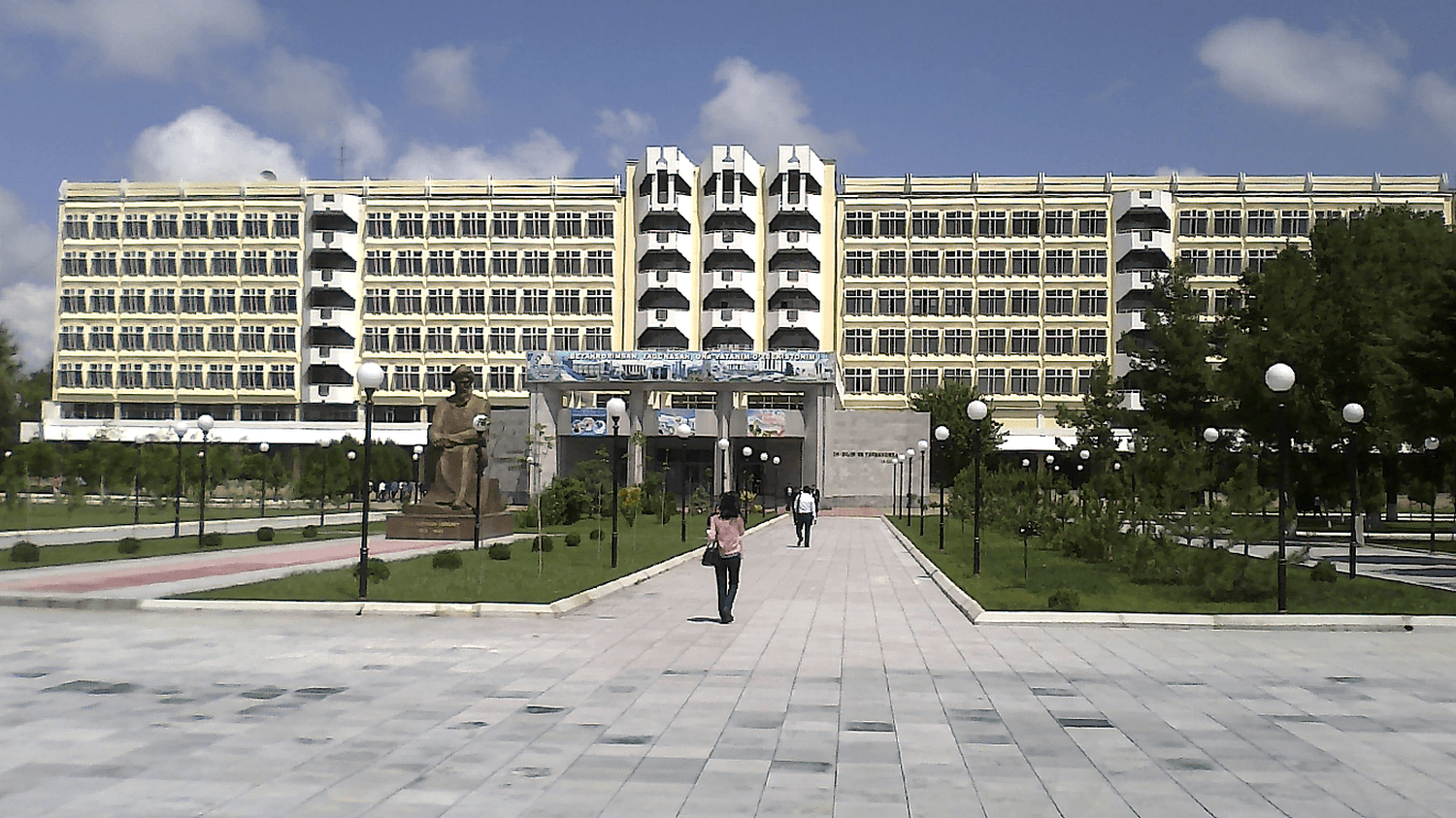
In the north-west of the city lies Tashkent’s largest architectural complex — the university campus, which unites the buildings of the National University of Uzbekistan and Tashkent State Technical University.
The decision
to build the campus was made in 1959, as the faculties and administrative
buildings of these universities were scattered across the city, outdated, and
hindering their development.
The project
was entrusted to Moscow’s “Giprovuz” institute for university design. Yelena
Kalashnikova was appointed chief architect. Together with colleagues —
architects Ye. Sudakov, M. Ivashkin, M. Fyodorova, Ye. Baburskaya, and
engineers Ye. Yegorov and N. Gorbunov — she created a project reflecting the
contemporary trends of minimalism and functional priority. The complex combined
administrative buildings, academic blocks, a cultural centre, and student
dormitories. Construction began in 1961; by 1971 some faculties had already
started the academic year in the new buildings.
The main
visual landmark of the complex is the 11-storey administrative building and the
central academic block, from which teaching wings connected by galleries extend
in different directions.
In the early
1980s the administrative building of the Polytechnic Institute was constructed,
while its mechanical, geological, and energy faculties had begun operating back
in 1971–1972.
Today the
National University comprises 17 faculties, 85 departments, and around 1,300
teaching staff.
The
Polytechnic University (since 1991 — Tashkent State Technical University;
originally the Industrial Institute, from 1949 the Polytechnic Institute) was
founded in 1933 on the basis of university faculties. In 2017 it was named
after Islam Karimov. Currently, TSTU has 8 faculties, 58 departments, 735
lecturers, and over 11,000 students.
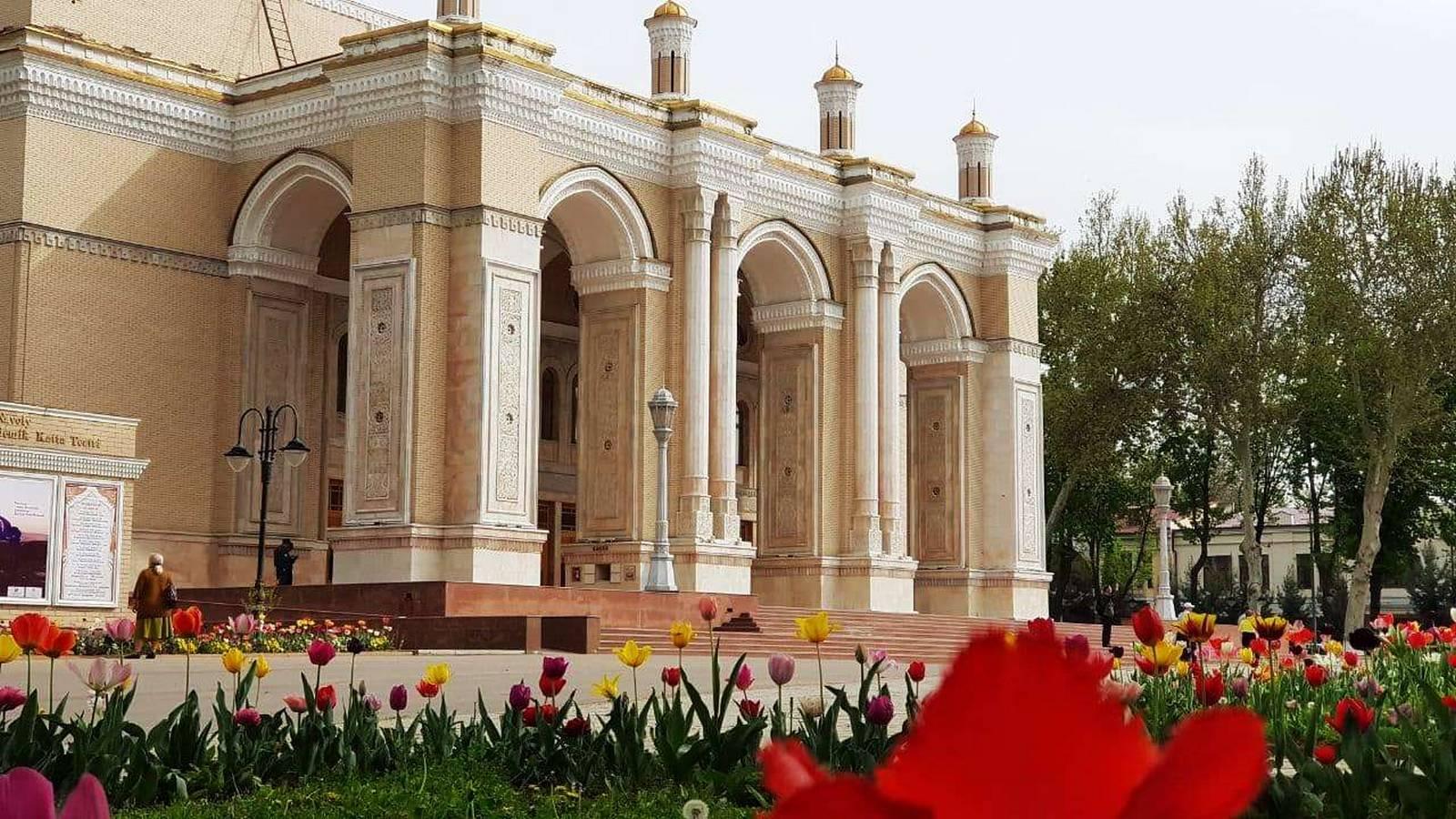
One of the most beautiful and recognizable buildings in Tashkent is the Navoi Theater. It was built...
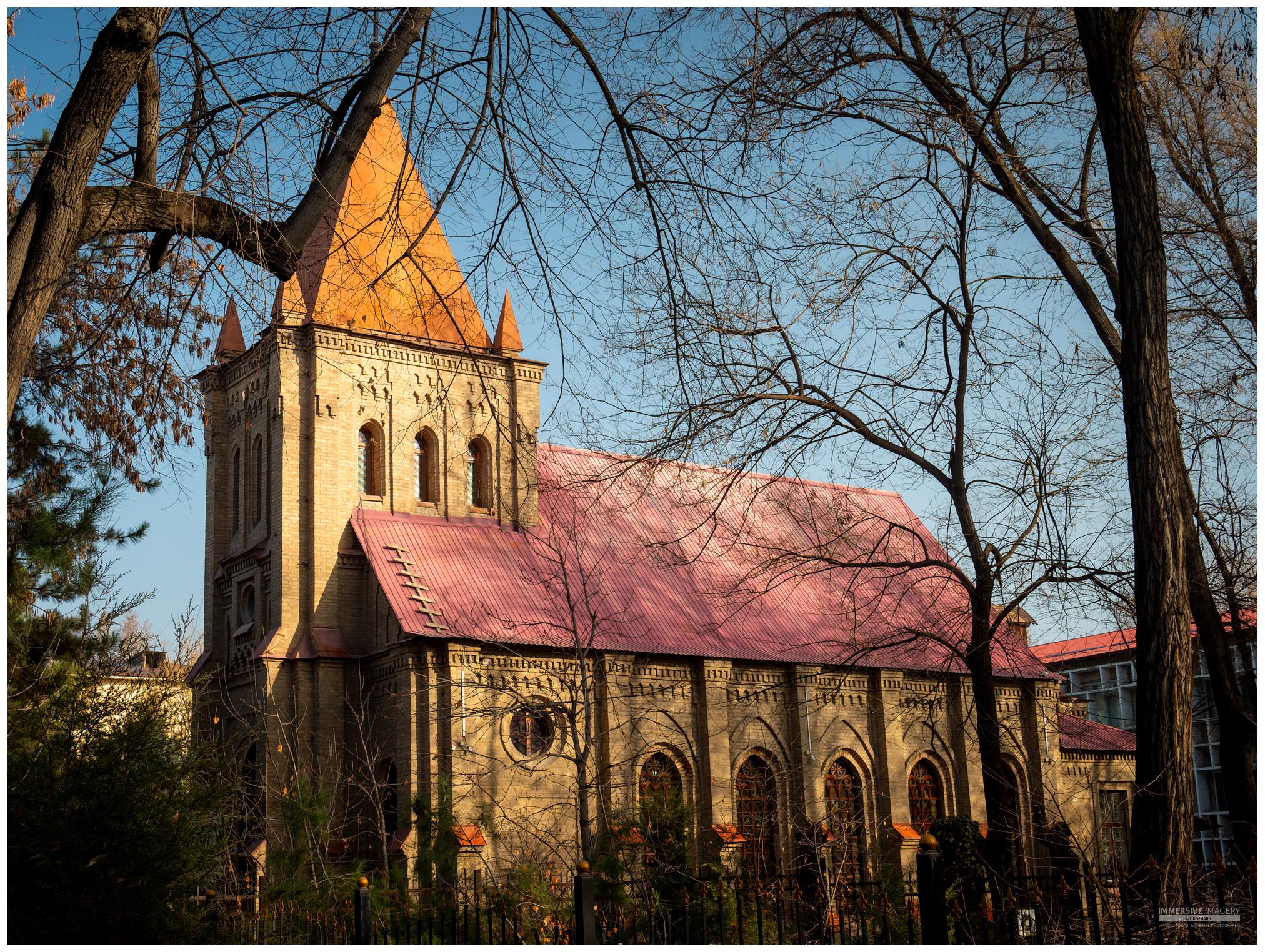
The Tashkent Kirche is considered the first Lutheran church in Central Asia. The initial design of ...
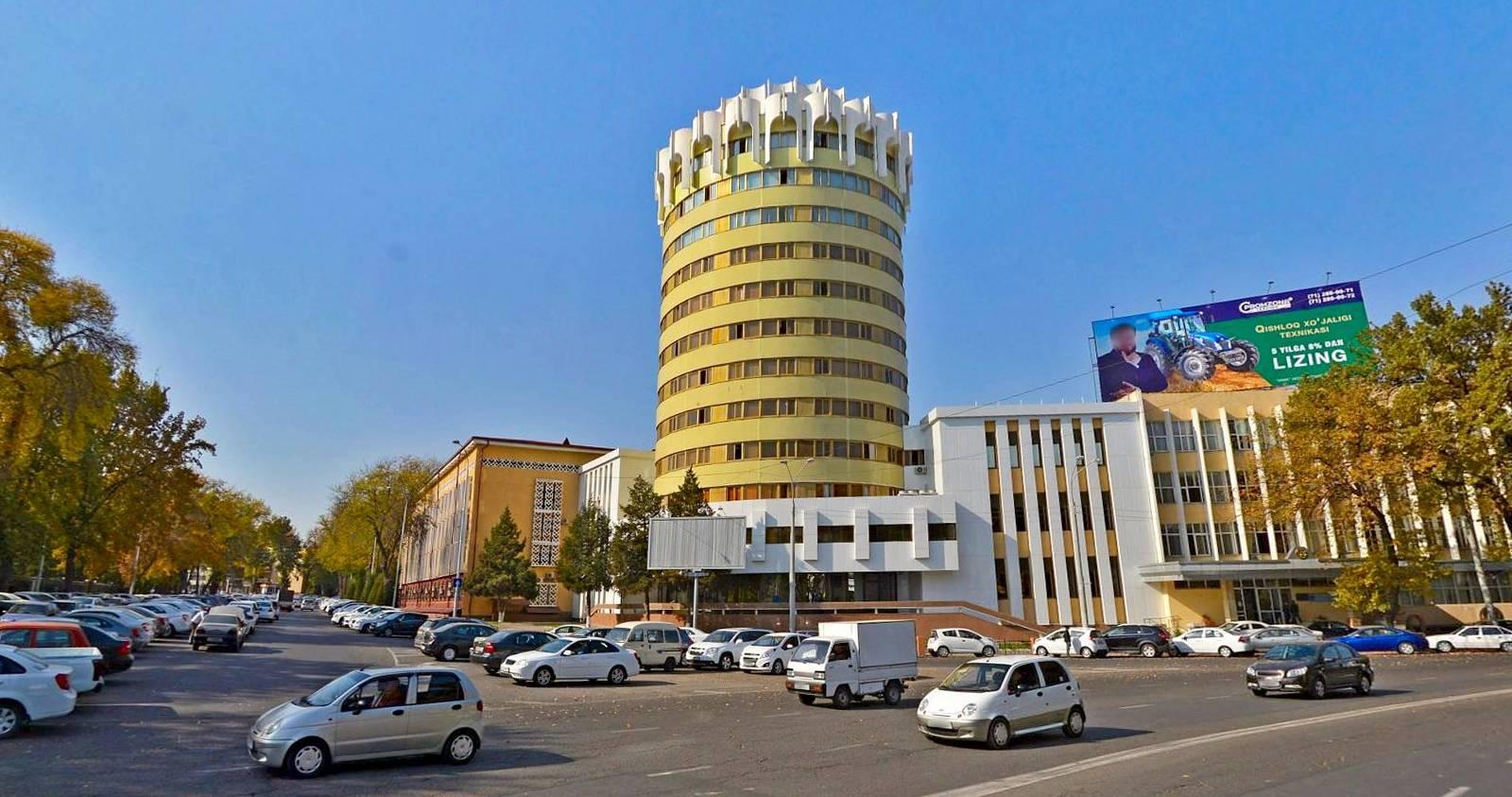
An unusual cylindrical building for Tashkent, constructed in 1988, visually "holds" the intersecti...
Once, this place was called Asakin Square — a major transport hub and one of the city’s main landma...