
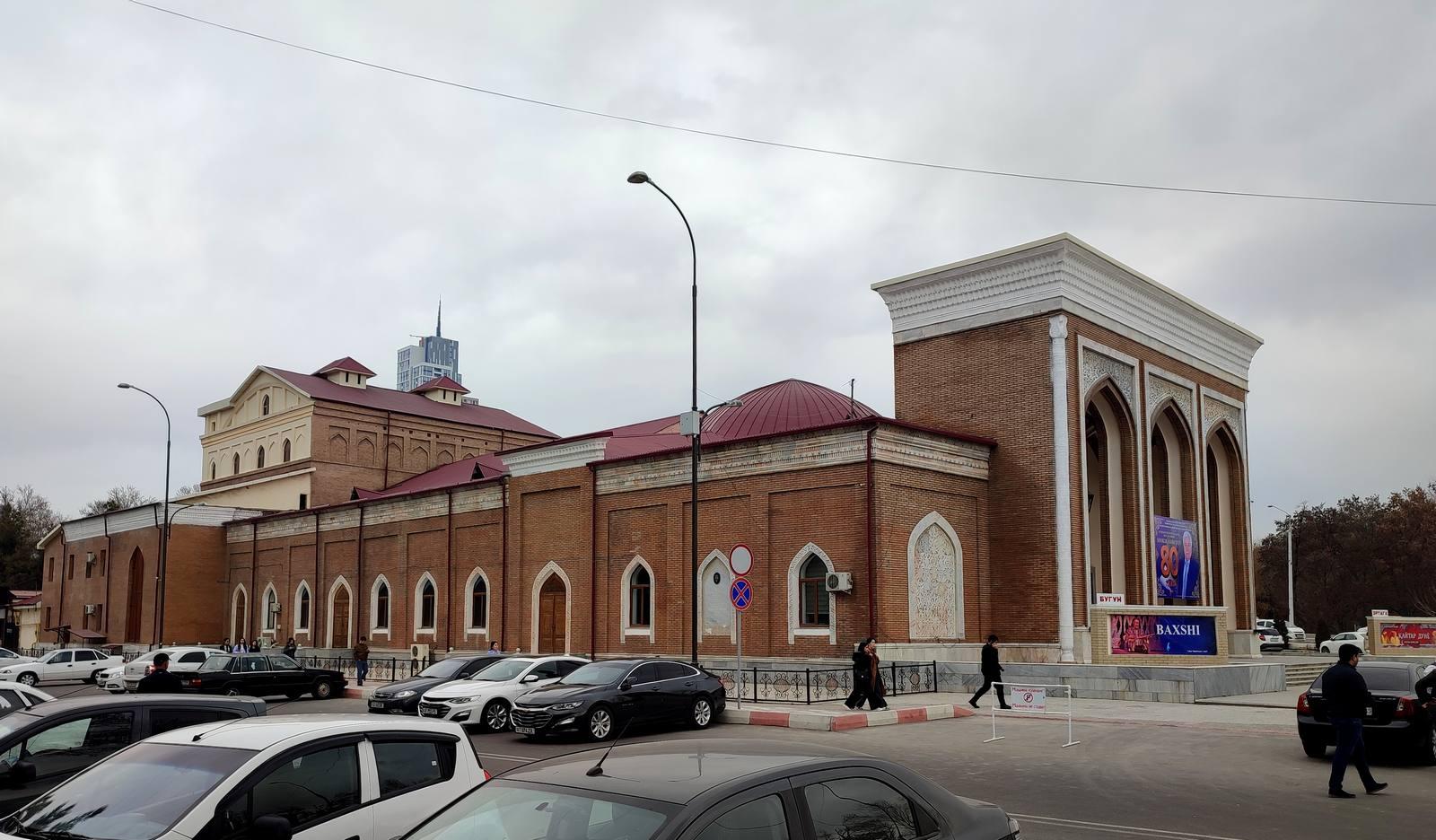
The beautiful building of the Mukimi Uzbek State Musical Theater on Beshagach Square is familiar to everyone. However, few know that the theater celebrated its 85th anniversary — it was founded on November 30, 1939. The troupe included the greatest masters of Uzbek musical and dramatic art. The premiere performance was Hamza’s comedy The Tricks of Maysara. But the collective’s activity began even earlier — in 1929, when it was called the Uzbek Opera Theater, presenting opera art and musical drama.
In 1939, it was divided into the opera (now the Navoi State
Academic Grand Opera and Ballet Theater — GABT named after Alisher Navoi) and
the musical (now the State Musical Theater named after Mukimi).
The theater building was constructed quickly, in just six
months, and completed in 1943. Architects: D. Khazanov, V. Tikhonov; engineer:
A. Rabinovich; folk masters: Yu. Musaev, M. Kasimov, Usmon Shirin, Sh. Gafurov,
Usto Yusuf. The architectural forms of the building are entirely expressed in
the national style. Traditional local materials were used in construction. On
the central facade, visitors are greeted by a tall portal with three pointed
arches. The premises are built on the basis of vaults and domes; no wooden
ceilings are used — only brick and stone.
The auditorium is designed for 800 spectators. The interior
spaces (foyer and hall) evoke the traditional volumetric architecture of
mosques and madrasas. There are no columns in the hall at all; the ceiling is
supported solely by original brickwork.
After gaining independence, the theater building was
reconstructed, and the auditorium and facade received updated decoration.
Originally named after the Tashkent Soviet, the theater is
named in honor of Muhammad Amin-khoja Mukimi (1850–1903), an Uzbek
enlightener-poet.
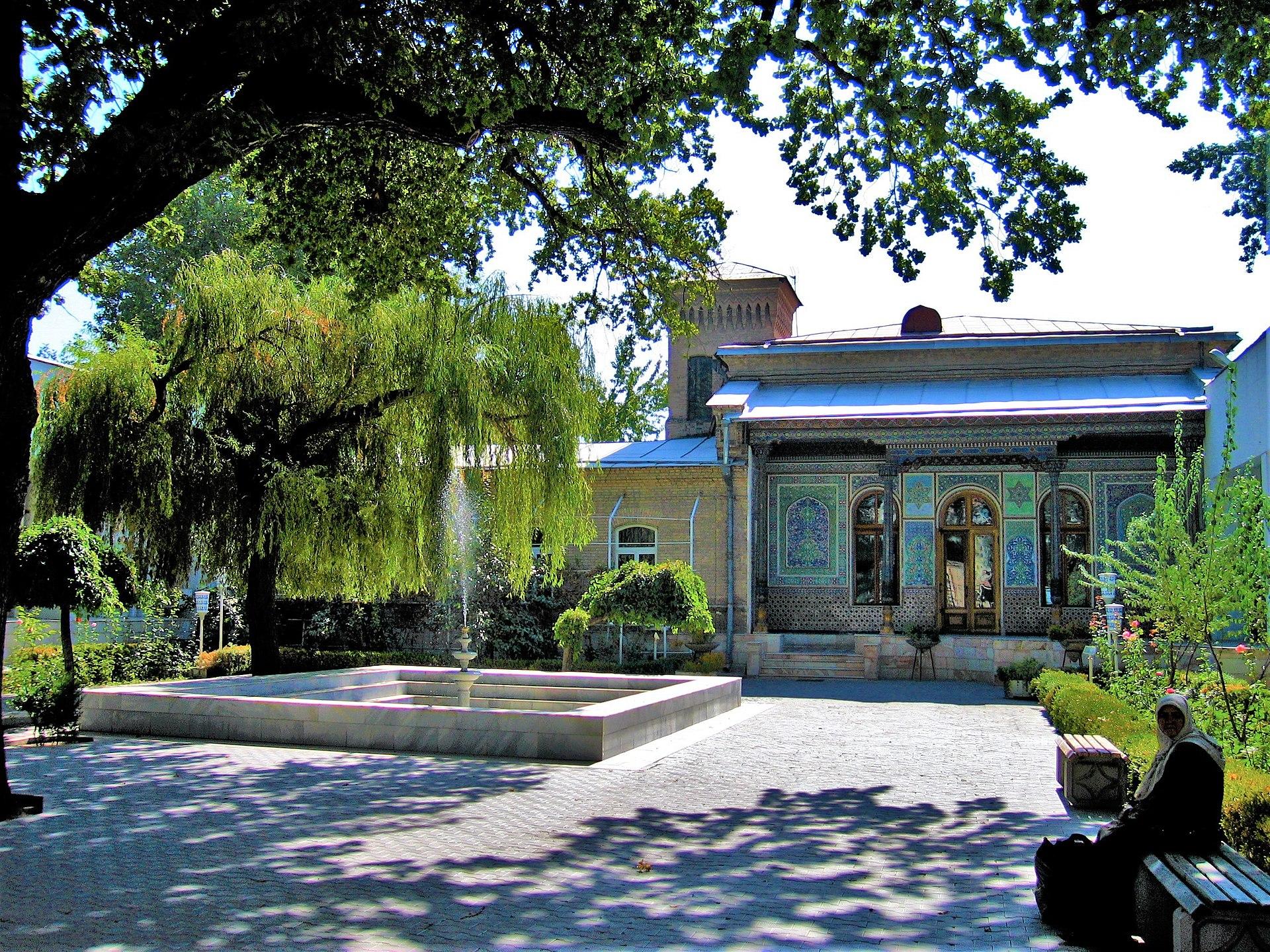
One of the most fascinating and educational places in Tashkent is the State Museum of Applied Arts...

The three turquoise domes next to the Kukeldash Madrasah are visible from afar and define the lands...

In January 2025, one of Tashkent’s symbols — our TV tower — turned 40 years old. Originally design...
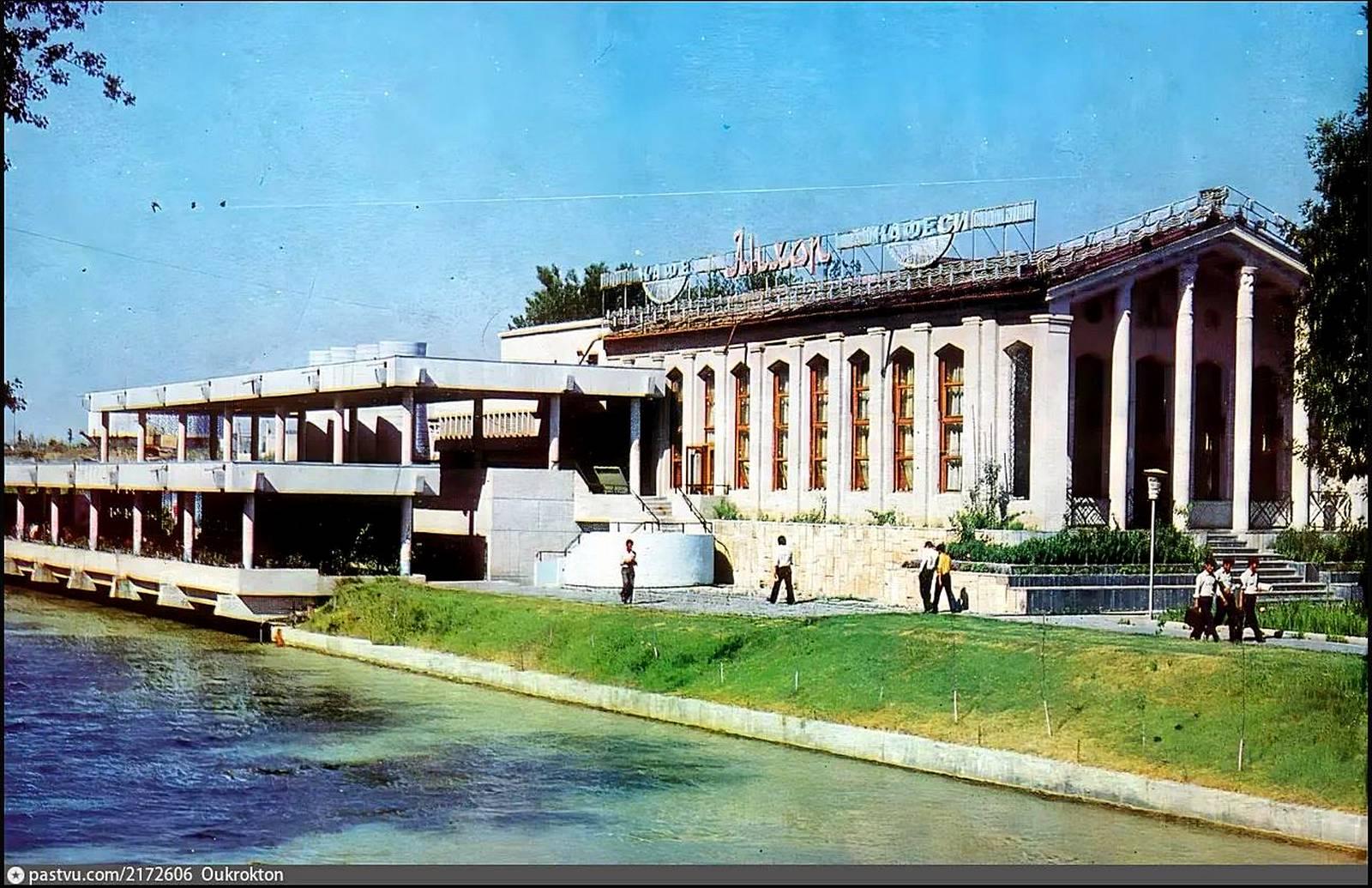
The teahouse on the Anhor canal bank was built in 1956 according to the design of architect V. M. D...